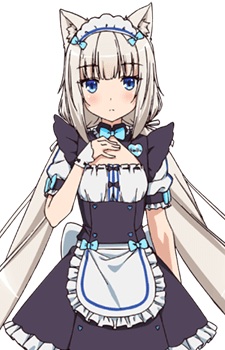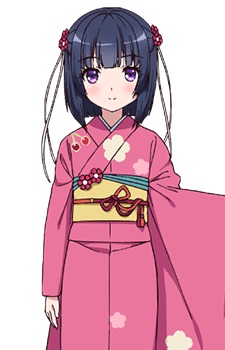
Nekopara figures

ネコぱら 仔ネコの日の約束

7.00 finished_airing 1 episodes ona 2018
Studio: Felix Film aNCHOR
Anthropomorphic Comedy Romance

About Nekopara

Nekopara Anime Overview

Nekopara figures fit a series that has built its identity around warmth, charm, and a very recognizable cast of catgirls. The Nekopara anime takes a world of pastry shops, family bonds, and everyday routines, then adds a fantasy twist by placing catgirls at the center of domestic life. Rather than focusing on epic conflict, the series leans into comfort, affection, humor, and the gentle rhythms of shared work. That gives Nekopara a very different tone from many other anime adaptations of visual novel franchises.

The story revolves around Kashou Minaduki, a young pastry chef who leaves home to open his own patisserie, La Soleil. Once he begins that new life, two catgirls from the Minaduki household, Chocola and Vanilla, follow him and insist on staying by his side. What begins as a small domestic arrangement soon grows into a much larger found-family setting as more familiar faces from home enter the picture. The result is a series built on routine, companionship, and the appeal of a bright, carefully arranged world.

That is what gives the Nekopara anime its distinct personality. It is not driven by suspense or large-scale stakes, but by atmosphere, character chemistry, and the pleasure of spending time with people who clearly care for one another. The series presents softness as its central strength, and that choice has helped it stand out in its own way.

Nekopara Story and Characters

At the center of the story is Kashou, whose decision to open La Soleil gives the series its main setting and emotional structure. He is not written as a dramatic action protagonist. Instead, he is steady, hardworking, and quietly devoted to baking. That calm presence matters because Nekopara depends on emotional balance. Kashou provides stability while the catgirls around him bring different kinds of energy into the shop and household.

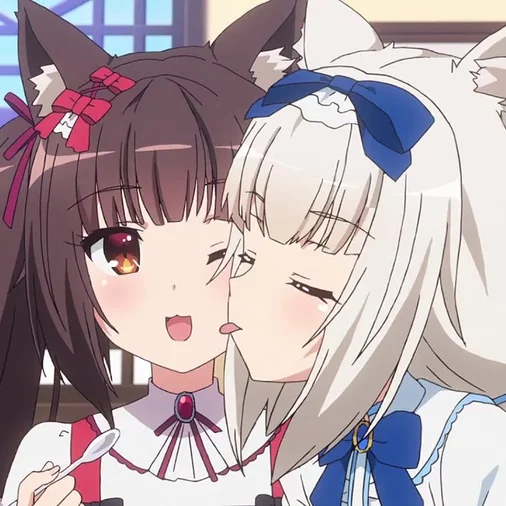
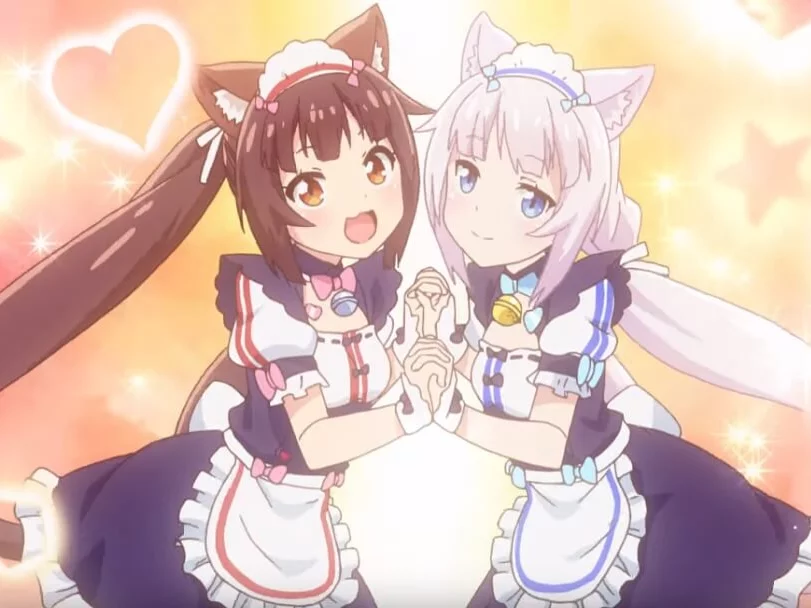
Among the most recognizable Nekopara characters are Chocola and Vanilla, who define much of the series’ appeal from the beginning. Chocola is bright, enthusiastic, and openly affectionate, with an energy that immediately lifts every scene. Vanilla, in contrast, is calmer, more reserved, and often dry in the way she expresses herself. Together they form one of the most memorable duos in the franchise because their personalities are so clearly distinct yet emotionally inseparable. Their dynamic gives Nekopara much of its warmth and humor.

Shigure Minaduki adds another important layer. As Kashou’s younger sister, she plays a major role in connecting La Soleil to the broader Minaduki household. Shigure is expressive, dramatic, and deeply attached to the people around her, which makes her one of the more forceful personalities in the cast. She often drives scenes through emotional enthusiasm alone, creating momentum in a story that is otherwise deliberately relaxed.

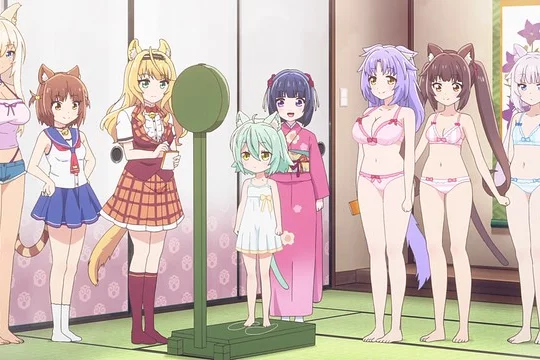
Azuki, Maple, Cinnamon, and Coconut expand the tone and rhythm of the ensemble. Azuki brings sharpness and confidence, Maple has a more refined and aspirational quality, Cinnamon adds softness with a playful edge, and Coconut carries a mixture of earnestness and insecurity that gives her a particularly sympathetic presence. One of the strengths of Nekopara is that its cast rarely feels interchangeable. Each girl contributes her own emotional color to the group, and that variety keeps the slice-of-life structure lively.

Nekopara Worldbuilding and Setting

The world of Nekopara is one of the reasons the series feels so immediately approachable. It resembles an ordinary contemporary setting, but with one major difference: catgirls are a normal part of society. That single adjustment changes everyday life without turning the series into hard fantasy or complex science fiction. Instead, it creates a soft alternate reality where domestic routines, care, responsibility, and companionship become the main focus.

La Soleil is the heart of that world. The patisserie is more than a workplace. It is the point where the series’ themes of found family, effort, hospitality, and affection all meet. Through the shop, Nekopara connects baking with emotional warmth. Desserts are not just products here. They represent care, craft, and the desire to make people happy through small, beautiful things.

The setting also helps explain why the story feels so calm even when characters argue or misunderstand one another. Nekopara is built around closeness rather than danger. Problems tend to be personal, domestic, and emotional instead of catastrophic. That does not make the story empty. It simply means the stakes are tied to belonging, trust, and personal growth rather than survival or conquest.

Nekopara Themes and Style

The clearest theme in Nekopara is care expressed through everyday life. The story repeatedly returns to working together, eating together, learning together, and supporting one another through small acts of loyalty. That gives the series an almost pastoral quality even though its setting is contemporary. Happiness is not presented as something grand or distant. It is built through repetition, routine, and shared space.

Another important theme is family, especially the idea that family can be both inherited and chosen. The Minaduki household and La Soleil function together as a network of emotional belonging. Characters are not defined only by role or duty. They are defined by how they care for one another, how they make room for one another, and how they grow through living closely together.

Stylistically, Nekopara embraces softness. The character designs are polished and highly recognizable, the atmosphere is bright, and the presentation favors warmth over tension. Even when the story touches on insecurity, separation, or conflict, it usually returns to a welcoming tone. That consistency is a major part of the franchise’s appeal. Nekopara knows exactly what kind of emotional space it wants to create, and it maintains that space with confidence.

Nekopara Animation and Production

The anime adaptation works best when it focuses on tone. Nekopara is not a series that depends on elaborate action choreography or dramatic plotting. Its strength lies in expression, pacing, and visual comfort. The animation supports that by emphasizing gentle movement, bright interiors, attractive food presentation, and character acting that lets the girls’ personalities come through clearly.

The broader animated history of the franchise also helps shape its identity. The OVA and later television anime gave the series multiple ways to bring its world to the screen, while preserving the same core appeal: domestic charm, cute interactions, and a cast built around instantly readable contrast. That consistency helped the anime side of Nekopara feel like a natural extension of the games rather than a disconnected adaptation.

Because the series relies so heavily on mood, even small production choices matter. The look of pastries, the atmosphere of the shop, and the rhythm of dialogue all contribute to the sense that Nekopara is meant to be inviting. The anime understands that comfort is part of the experience, not just a side effect.

Nekopara Popularity and Impact

Nekopara became especially visible because it managed to turn a simple premise into a very cohesive franchise identity. Many series have cute characters, but Nekopara stands out because its cast, setting, and tone all reinforce the same kind of appeal. From the start, it offered a world of sweetness, polish, and recognizable character dynamics, which made it easy for the franchise to extend across games, anime, and merchandise.

Part of its popularity also comes from how clearly the characters are defined. Chocola and Vanilla in particular became strong visual anchors for the series, but the wider cast helped it remain more than a two-character property. Azuki, Maple, Cinnamon, Coconut, and Shigure all contribute to a broader emotional and visual range, which is one reason the franchise translates so well into collectibles and display items.

Within anime culture, Nekopara occupies a softer niche. It is not trying to overwhelm the viewer with complexity. Instead, it offers a stylized space of comfort, affection, and routine. That gives it a lasting appeal for audiences who value atmosphere and character presence just as much as plot progression.

Nekopara Figures and Merchandise

Nekopara figures are a natural match for the franchise because the character designs are so polished and immediately recognizable. Chocola is an obvious centerpiece for anime figures thanks to her bright expression, playful pose potential, and strong visual identity. Vanilla works especially well alongside her, since the contrast between the two is one of the defining pleasures of the series. Azuki, Maple, Coconut, and Cinnamon also offer excellent variety for collectors, each bringing a distinct mood through costume details, posture, and personality.

For collectors, Nekopara has room for several figure styles. Nendoroids can capture the cast’s cuter expressions and pair dynamics, while scale figures are ideal for maid-inspired outfits, bakery-themed displays, and carefully sculpted character details. Pop Up Parade releases and prize figures would also suit Nekopara very well, especially for collectors who want to display multiple characters from La Soleil together. Beyond figures, acrylic stands, keychains, art goods, and other merchandise fit the franchise naturally because its cast was built for visual charm as much as storytelling presence.

Because Nekopara characters are so strongly tied to mood and contrast, the best collectibles often work as both individual pieces and group displays. A lineup featuring Chocola, Vanilla, Azuki, and Maple immediately captures the tone of the series, from playful sweetness to calm elegance and livelier shop energy.

Browse the full Nekopara figure collection at Online Otaku, from Nendoroids to scale figures, sorted by character.
Created by: NEKO WORKs
Published by: Sekai Project
Year started: 2014
Nekopara Nekopara
Nekopara Nekopara